Sunday, 25 August 2013

Gemista (Stuffed Vegetables)


Gemista is a great dish to have during the summer, the tomatoes and peppers are excellent during this season. This is one of the first few Greek dishes that I mastered cooking - it isn't as time consuming as moussaka, and when I do make it, I make a lot so that it will last us for 2-3 days. Gemista is one of those dishes that taste better the next day, like curries and stews.

This is George's grandmothers' recipe. I do know that some people add minced meat, some add mint and there are lots of variations, and mine is most certainly not the 'authentic' one. Kalliope is a great cook, and she knows how to get the best flavours out of simple ingredients. This is great for vegetarians and vegans too! What differs here is my use of rice. I find that basmati rice makes it a more drier and fragrant stuffing. I have used wild rice mixed with basmati, and even brown rice (although this would require a bit more water than usual, or not it'll be too 'dry and uncooked' even for me). But use what you feel comfortable cooking, and what suits your palate.

Ingredients: (For 6 hungry people)

For the Rice Stuffing (don't worry, there will be leftovers*)
1 cup of rice
1/3 cup of olive oil
3 medium onions, diced
1 1/2 cups of chopped tomatoes (*see below)
100g of parsley, chopped
Salt and pepper, to taste
A pinch  of oregano

The vegetables:
Enough peppers, tomatoes, aubergines and potatoes to fit a baking pan. Like so. The peppers were rather small here...
Prepare the vegetables like this:
Cut the tops off, and with a spoon, scoop out the tomato flesh and seeds. Reserve it, even the juices. Chop it, and you can use it for the rice stuffing. For the peppers, cut the tops off and remove the seeds. For the aubergines, chop it like above and scoop the flesh out. You can keep the leftovers, flesh and seeds for ratatouille. (I kept mine to make an aubergine omelette for breakfast the next day) Make a cap with the leftover aubergines.

1/2 to 1 cup of olive oil (according to preference.)
Some water
Salt and pepper to taste

Preparation:

  1. Prepare the vegetables. Arrange it in the baking pan, and arrange the potatoes around the vegetables. 
  2. Now to prepare the stuffing. In a pot, heat up the olive oil. Add the onions and saute. Once translucent, add the rice and coat the rice in the oil. Add the tomatoes and parsley, and stir continuously. Season with salt and pepper, and then add the oregano. Once the liquid has been absorbed, remove from heat, and let cool.
  3. Preheat oven to 180c (with fan. If not, 200c)
  4. Scatter salt and pepper all over the vegetables, especially the potatoes. Stuff the vegetables with the rice, up to the middle-mark.
  5. For the aubergines, add 2 tbsp of water in with the rice. For the peppers, 1 tbsp would do. None for the tomatoes. 
  6. Cover the vegetables with their caps. Scatter more salt and pepper on top, Jamie Oliver style. Now slowly and gently pour the cup olive oil around onto the vegetables and the potatoes. 
  7. With a teaspoon, add water in small amounts onto the potatoes to help them cook, but not too much, mind you - we don't want it to get soggy.
  8. Put it in the oven. Leave it in there for 1 to 1 1/2 hours. Check to make sure the tops haven't burned.
  9. Also, check to see if the potatoes have cooked. Insert a knife and if its soft, means its ok. Lift one of the vegetables to see if the rice is cooked inside. If not, return to the oven for another 20-30 minutes.
  10. Serve! I usually have a side serving of feta sprinkled with a little oregano and olive oil.


*What to do with the leftover rice? Just add water until it barely covers the rice, and continue cooking it on the hob. Once the water has dried up and you can see that there are 'sinkholes' scattered around the surface of the rice, take it off the heat. Cover, and let it steam for 10 minutes. Eh voila, tomato rice that you can serve as a side dish.


Easy Lassi


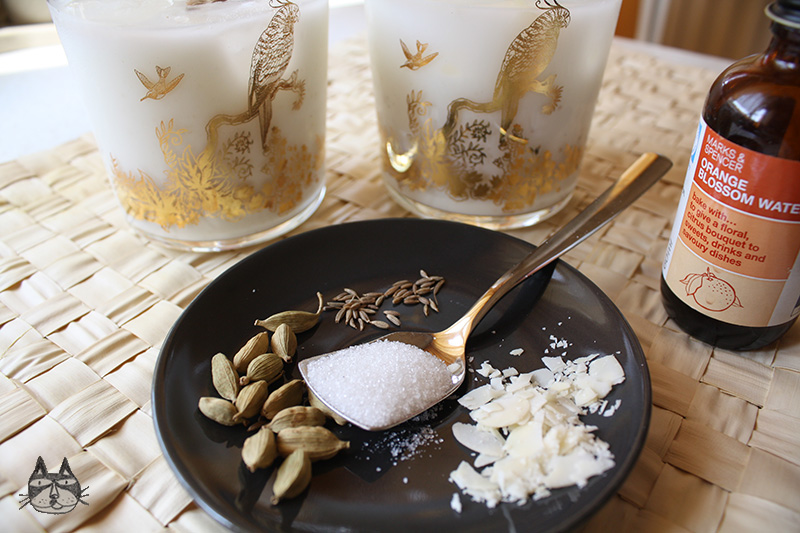
Fruit Lassi (like the Mango one) is very tasty. But in Malaysia, what I usually go for is the Savoury Lassi. It is flavoured with cumin, and it is one of my favourites when I go and have Indian food. It goes really well when you are eating curries and biryanis. I have also tried a Lassi that smells heavenly and tastes sweet like nectar. Here you can find the 2 variations, the savoury spice lassi, and the fragrant sweet lassi.

Its very easy to make. I use Ariani here, or you can use the yogurt-water mix (find the recipe for that here) too, or kefir. I like to use gula melaka here, grated. It adds a bit of colour to the drinks, but feel free to use honey (which tastes excellent!) or any sweetener of your choice. Sometimes, when I can find fresh pandan leaves, I will make pandan essence and use that instead of the rose water.

Note: The pictures here don't do it any justice. It was so hot that the ice has started to melt and made the lassi lose its bubbles and look watery....

Ingredients: (makes 2 glasses)

Savoury Spice Lassi
500ml of straight from the fridge, cold Ariani (or substitute)
1 tsp of gula melaka sugar (or sweetener of your choice)
1/4 tsp of ground cumin
1/4 tsp of ground cardamom (how? *read below)
A pinch of salt
A pinch of whole cumin seeds to scatter as garnish
Ice

Fragrant Sweet Lassi
500ml of straight from the fridge, cold Ariani (or substitute)
1 tbsp of gula melaka sugar, to taste (or sweetener of your choice)
1/2 tsp of ground cardamom
1 tsp of rose water (or any blossom water you have)
Ice
A pinch of crushed almonds (or flaked)


Preparation:

For the savoury spice lassi:
  1. In a blender, add the Ariani, sugar, spices and salt. Pulse until its mixed.
  2. In a glass, add the ice. Pour the mix into the glass.
  3. Garnish with the cumin seeds.
  4. Serve!
For the fragrant sweet lassi:
  1. In a blender, add the Ariani, sugar, cardamom and rose water. Pulse until its mixed.
  2. In a glass, add the ice. Pour the mix into the glass.
  3. Garnish with the crushed almonds.
  4. Serve!


*Ground cardamom: Cardamom pods are quite easy to find, but ground, is harder. Why? because the seeds inside the pods, once exposed, will start to lose its lovely fragrance. You will be able to find them ground, of course, but its usually ground together with the pods and well, quality-wise, its not as good. It is the third expensive spice in the world weight-wise after saffron and vanilla, better not waste your money with something sub-par. So what I do is put the pods in the lesung (pestle and mortar) and crack the pods open. I discard the shell pods and I ground the seeds until fine.

Thursday, 22 August 2013

Asian Beef and Noodle Salad


Its summer time now in Greece, and the weather can get extremely hot. But there are times I miss the stir-fried noodles like Mee Mamak, which I would squeeze lime juice all over and mix while its hot. Or Pad Thai, and my Achilles heel of all stir-fries, Char Kuey Teow. Its too hot (and not to mention very un-dietific) for me to make stir-fried noodles, so I have decided to make it a salad, of sorts.

There are other types of beef and noodle combination salads from Thailand and most famously from Vietnam. This salad is influenced by the ones I have just mentioned, but I am going to be using kuey teow, flat rice noodles, as compared to vermicelli or glass noodles. You can use any sort of noodles that catch your fancy, and cook it according to the instructions on the packet.

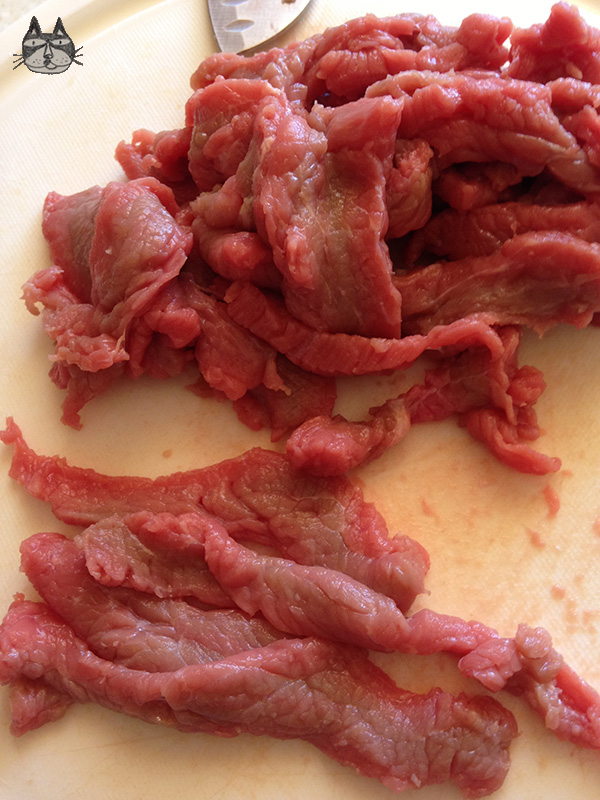
The beef has to be thinly sliced, against the grain, and marinated in my 'Momofuku-inspired' sauce.

As for the vegetables, I am using a simple lettuce salad mix from a packet - its an Italian mix, which has lolla rossa and rocket amongst others. I have also added spring onions, tomatoes and cucumbers to the mix. I also like to add some fresh leaf herbs in the mix - coriander (cilantro) goes really well. But you can use chives, or basil, or mint (but just a small amount as to not overwhelm). If you can find Vietnamese mint or Thai basil, it would be an excellent addition!

Additional garnishes are the peanut and wasabi sesame seeds mix, hard boiled eggs and if you would like it with a little spice, some shichimi togarashi (chilli powder).


Ingredients: (enough for 2 main dishes or 4 smaller portions)

250g to 300g of thinly sliced beef
Momofuku-inspired sauce
1 tsp of vegetable oil
Salad leaves (of your choice)
Sliced cucumbers and tomatoes and feel free to add other types of veggies that you fancy
2-3 sprigs of spring onions, sliced
A small handful of chopped herbs (coriander, or mint, or chives.)
A handful of peanuts, chopped (or pounded into chunks), mixed with sesame seeds.
2 hard boiled eggs, quartered.
50g of noodles, cooked according to packet instructions
For the salad dressing:
1 tbsp of lime juice
4 tbsp of olive oil
1 tsp of fish sauce
1 tbsp of mirin (or replace with 1 tsp of sugar if you don't have any)
Salt and pepper to taste


Preparation:


  1. Marinade the beef with the Momofuku-inspired sauce. Leave aside.
  2. Make the salad dressing by whisking all of the ingredients together until smooth.
  3. In a big salad bowl, add the vegetables and the noodles and mix with your salad spatulas.
  4. Add the dressing in 1 tbsp intervals until the salad and noodles are coated but not drenched in the dressing. You will have leftover dressing.
  5. Cook the beef. Make sure the wok/pan is HOT, add 1 teaspoon of vegetable oil, and add the beef in and flash fry it fast. Once cooked, add it into the salad bowl, immediately.
  6. Toss the salad with the beef, and serve on a plate/bowl.
  7. Add the garnish (the eggs and the peanut sesame seed mix) on top.
  8. You can serve the leftover salad dressing separately by the side if anyone wants more.


Momofuku-inspired Sauce


David Chang is a genius. I have tried quite a few of his recipes from his Momofuku cookbook and they were heavenly. The technique of how to slowly poach eggs is one that I will always use, and his ginger and scallion sauce is the 'mother sauce' as he calls it. One of my dreams is one day go to New York and eat at Momofuku.

One day, I realised I was out of rice vinegar, and it was a Sunday, and I had already chopped the spring onions and grated the ginger and I have my ramen noodles all ready for me to eat. The sauce was a no-go. I didn't even have balsamico vinegar and I was heartbroken. And very very hungry. Rummaging through the fridge, I found a small lime in the back of the vegetable tray. Hah, that will do. I tweaked the original recipe a bit, and added a little more soy sauce, mirin and a small amount of sesame oil. And it was yummmeeeehh.

I sometimes like to add some fish sauce to the mix, but you can omit this if you're vegetarian. And if you don't have lime juice, stick with the original recipe, use vinegar instead. But taste for the tangy sharpness first at 1 tsp of vinegar before you add another. I use the mirin to counteract the sharpness of the lime juice, so if you don't have mirin, just add a small pinch of sugar.


Ingredients: (makes about 1 cup of sauce)

200g of spring onions, chopped/sliced thin
40g to 50g of ginger, minced/grated. (weigh before mincing/grating)
2 tbsp of vegetable oil
1 tbsp of light soya sauce
2 tsp of lime juice
1 tsp of mirin
1/2 tsp of sesame oil
1/2 tsp of salt (preferably coarse salt), and maybe a bit more extra, to taste.
1 tsp of fish sauce (optional)


Preparation:

Mix the spring onions and ginger with 1/2 tsp of the coarse salt. Mix with a spoon, thoroughly, so the salt mixes in properly. Add the oils, mirin, the sauces and 1 tsp of lime juice. Whisk it all together with a small balloon whisk or a fork. Taste for the lime juice. If its too sharp, leave it there, if you think you can handle another tsp of lime juice, add another. Taste again in the end just in case you need to add more salt. Its best after 15-20 minutes, but usually I am too hungry to care. Use it with noodles, on top of rice and a fried egg, or as a marinade. It goes great with tofu, too!


Wednesday, 21 August 2013

Rendang Ayam Pah (Pah's Chicken Rendang)


It was Raya earlier this month, and as usual, with Raya comes 'all the food from home that I miss'. Chicken Rendang is chicken simmered in coconut milk with spices. It takes a long time to cook, but oh my its worth the wait. It smells heavenly and the coconut, lemongrass and ginger infused chicken melts in your mouth.

And not to mention the chilli spicy bomb! (Although you can make it as hot or as mild as you want). Traditionally, back home in Malaysia, we usually eat this rendang during Raya at my grandmother's house (Pah. Its her recipe!) and it is served with lemang (glutinous rice cooked in bamboo.) and ketupat. I usually make a lot of this scrumptious chicken heaven whenever I can find the fresh ingredients (which is not as often as my husband would like). Its my signature dish (and nasi lemak) when my in-laws come to town from far-away Thessaloniki.

Be prepared. Have a big pot ready. A book or something to keep you occupied during the long intervals. And music or an audiobook to keep you company while you chop and slice. And lots of patience. The slicing and chopping takes a LOT of time, (and quite a few tears with the shallots, mind you)

Ingredients: (Makes enough for a dinner party of 6 people, with leftovers, if you're lucky.)

1.5-2kg of chicken, in pieces, with the bone.
1 can of coconut milk
1 small box of coconut cream

The Rendang Holy Trinity
100g of fresh lemongrass, chopped/sliced thinly.
100g of fresh ginger, sliced into thin matchsticks.
250g of shallots, sliced thinly into strips.

2-3 tbsp heaps full of Kerisik
Salt to taste.
Some water.
Simple chilli sambal paste, according to how lucky you're feeling today, punk. I use 3-4 tbsp myself, depends how spicy the chillies are.


Preparation:

  1. Music? Check. Big pot on the stove? Check. Ingredients are all prepared? Check.
  2. In the pot, add the coconut milk, the trinity, and the chilli sambal paste.
  3. Stir, and then add the chicken pieces into the mix. 
  4. If there isn't enough liquid to cover the chicken pieces, add some until chicken is covered, and stir.
  5. Add salt.
  6. Turn on the burner, and let simmer on medium low heat so as not to burn the bottom of the pot.
  7. Check often and stir when you can.
  8. Once the chicken has cooked and become soft, to prevent the meat from coming off the bone, take the pieces out, one by one, with a pair of tongs (its very helpful!). Put them in heatproof dish, and keep them somewhere warm - a slightly heated oven would do nicely. You are not going to be baking a cake, so the temperature doesn't have to be high. 
  9. The yummy golden broth in the pot needs reducing. Gently, does it. On low heat, simmer while stirring every now and again to prevent sticking at the bottom of the pot.
  10. Once reduced, add the coconut cream and cook until you can see the top turns shiny and glistening with coconut oil. This is what we call 'pecah minyak', the breaking of the oil.
  11. Add the Kerisik to the pot at this point. Stir.
  12. Return the chicken pieces to the golden sauce, and mix through. 
  13. Now be vigilant, and patient. Coat and toss and stir until the the sauce has reduced even more, and lovingly coating and turning the chicken into that golden amber hue you see in the picture. Warning, this mixture now burns easily.
  14. Now rejoice in your endeavour, and serve.

Serving suggestions:

  • I usually make Nasi Lemak and serve the rendang with it. It goes really well, and to prevent spicy chilli overload, I serve it with my Pomegranate and Cucumber Mint Raita.
  • Or serve it with plain steamed rice, so you can savour the flavours of the rendang and not get clogged arteries as a result of coconut milk overload.
  • With lemang and ketupat, of course. 


Simple Sambal Chilli Paste


This is simple, really. A simple sambal paste that you will use for cooking. It's simple (if you use the food processor), but I am a big fan of pounding the chillies in the lesung (pestle and mortar). Its quite cathartic, and you get an amazing red paste of . I usually add additional ingredients after to make it into a wonderful accompaniment/sauce. Example, fresh shredded coconut to make Sambal Kelapa (my mother's favourite!) that makes an excellent relish.


Ingredients: (makes 1 teaspoonful of paste. Multiply for more.)

3-4 big red chillies, or 10 small Bird's Eye Chillies (but they pack a mightttyy punch!)
Salt
1 tsp of water (only if you are pounding it in the pestle and mortar.)

Preparation:

  1. De-seed the chillies, and chop into small pieces. Wear gloves, wear gloves, wear gloves.
  2. In the lesung, pound the chillies, occasionally adding a pinch salt to help draw out the liquid, and water to make it easier to mash. Until smooth.
  3. If you're using the food processor, add the chillies and a pinch of salt. Blitz until fine.
Eh voila! Ready to use!

Here, I added some Ikan Bilis to the lesung while pounding, and I am eating it as a dip/relish with some crunchy unripe mangoes. The sour tanginess of the mango goes really well with the spicy savoury sambal!

Monday, 19 August 2013

Cucur Ikan Bilis (Fishy Fritters)


Cucur, which means fritters in Malay, is one of those 'easy to make with essential store cupboard staples' snacks that I always make, with variations. Add small prawns to the basic batter and it becomes cucur udang, add ikan bilis and it becomes cucur ikan bilis, or with extra onions/shallots and spring onions (vegetarian option!) so it becomes cucur bawang.

Its a fiendishly easy-to-eat snack, 'I'll just have one more, ok maybe another one' until you realise that you've actually eaten half of the enormous plate. Its crispy on the outside, and inside its soft and airy.

I remember my mother making cucur when I was 12 and we were all in England. It was winter, cold, dark and there were times when it got miserably chilly and dark here in Athens, I would fry up a small batch of these and just dip them with chilli or tomato sauce while its hot and feel right as rain again. Hooray for carbs and grease!

I am using the teeny small ikan bilis (anchovy) that I like here, but hey, any sort of ikan bilis is fine with me. Or use the normal canned or jar of anchovies if you want. Chop them fine, and use half of what the recipe states below.

Ingredients: (Makes enough for a married couple to snack while watching TV)

200g of all purpose flour
1 tsp of soda
1 tsp of salt
1 tsp of pepper
1 tsp of Shichimi togarashi (or just chilli powder)
50-70g of ikan bilis (soaked and drained)
1 onion, finely chopped
1 chilli, finely chopped
2 sprigs of spring onion, finely chopped
Water, about 1 cup (250ml) , but it can be more or less.
Vegetable oil, to fry


Preparation:

  1. In a big bowl, add the flour, soda, salt, pepper, chilli powder and mix.
  2. Add water bit by bit, stirring and mixing with a spatula until it becomes smooth, but not watery.
  3. Add the ikan bilis, onions, chillies and spring onions and mix.
  4. The mixture should be a bit more 'liquid' than the picture above (I took it before I added a bit more water ) 
  5. Heat oil in a pan, and once its hot, scoop tablespoonfuls of the mixture into the hot oil and fry on both sides until golden.
  6. Drain on a paper towel and then serve hot. With any sauce of your choice - although it goes really well with chilli sauce (or even tomato.)


Mango 'Lassi' Drink


Ah Mango Lassi. Such a refreshing drink, and you can make even the saddest looking mango out there (which is quite often than not) into something extremely delicious. Most (if not ALL) of the mangoes in the market here in Greece are from South America. Not to say that they are sub-par mangoes....but the mangoes I have had while I was in Malaysia were superb in flavour, and less of the stringey-stuff that mangoes always have. Asian mangoes (especially Indian ones) are far superior than any other that I have tasted. If you can find them where you are, lucky you! 

This came about when my landlady asked me what else she can do with mangoes because she bought one and had a few slices and declared it 'meh'. I remembered that lassi is made with yogurt, and it brought back memories of me having lassi back in Malaysia... but Greece also has a wonderful yogurt drink called Ariani - its originally known as Ksinogala ('sour milk'). Voila, a simple, refreshing drink is born - a mix of 2 cultures. It helps bring out the subtle sweet flavours of the mango (because the ones that come all the way from Brazil need a helping hand, or 2), and the Ariani is used as a replacement to the traditional yogurt and water mix. You can use kefir here too, if you want. I have done it before and the taste of milky yogurt is stronger there.

And, you can use any sort of fruit puree you want to make this fruit lassi. Peaches, or berries go very well too.


Mempelam

Ingredients: (for 2 big glasses of Lassi)

1 mango, cut the flesh off the seed and chop into chunks (or 2 if the mango is small)
250ml of water
250ml of Ariani (or Kefir, or, the yogurt/water mix *recipe below)
Sugar or other sweeteners, according to taste. (or none at all, as I like it)
Ice


Preparation:


  1. Put the mango in your food processor with the water and the sugar, if using.
  2. Blitz til fine.
  3. Put it through a sieve to get rid of any excess stringy pulp.
  4. In a jug, add the Ariani (or substitute) and mix.
  5. Add ice, and serve!


*Alternative to Ariani or Kefir
2 parts water, 2 parts plain yogurt and 1 part milk. DO NOT USE GREEK YOGURT. It's such a waste of good strained yogurt.


Sunday, 18 August 2013

Easy Iced Tea


This is actually a request from my friend Eleni. We were at Starbucks the other day and contemplated about iced tea and how GREAT it is on a hot summer's day (which happens everyday from June til September here in Greece). I don't use sugar in any of my drinks, but please add accordingly to your taste. Or use honey, or agave syrup or stevia if you want to. Also, if you are using pureed peaches/berries (blitz it in a processor, and then put it through a sieve if you want it smoother), you may want to add less sugar. 

Serve it with lots and lots of ice!


Ingredients: (makes a jugful for about 3-4 glasses)

3 tea bags of black tea (I use English Afternoon Tea here, but add one more bag if its English Breakfast Tea)
Juice from 1 lemon (or orange/grapefruit or pureed fruits like peaches or berries)
Sugar or sweetener of your choice, according to taste.
1 litre of hot water
500ml of cold water
Ice

Preparation:

  1. In a pot, add the teabags and steep them in the hot water for 5 minutes. Keep them any longer and the tea will taste bitter. 
  2. Remove the bags, and add your sugar or sweetener. Mix, and let cool.
  3. Add the lemon juice (or other citrus fruits or the fruit puree) into the cold water. Refrigerate so it stays cool.
  4. Once the tea mixture has sufficiently cooled, add the 2 mixes together, stir. Add ice, and serve!

Peach Iced Tea made with peach puree

Saturday, 17 August 2013

Sugo alla Puttanesca


The Puttanesca pasta sauce is a tasty mix of tangy, salty and spicy hot flavours. Puttanesca literally means 'whore' and Sugo alla Puttanesca means 'Whore's style Sauce'. 

Although the origin of the name may not be as 'sinful' as you think. From Wikipedia: 
According to Annarita Cuomo, writer for Il Golfo, a daily newspaper serving the Italian islands of Ischia and Procidasugo alla puttanesca was invented in the 1950s by Sandro Petti, co-owner of Rancio Fellone, a famous Ischian restaurant and nightspot.
In the February 17th, 2005 edition of the newspaper, Cuomo says the moment of inspiration came, when near closing one evening, Petti found a group of customers sitting at one of his tables. Petti was low on ingredients and told them he didn't have enough to make them a meal. They complained that it was late and they were hungry. "Facci una puttanata qualsiasi (Make any kind of garbage)," they insisted. In this usage, puttanata is a noun meaning something worthless. It derives from the Italian word for whore, puttana.At the time, Petti had nothing more than four tomatoes, two olives and some capers; the basic ingredients for the sugo. “So I used them to make the sauce for the spaghetti,” Petti told Cuomo.
So you see, it has nothing to do with the smells wafting out of a brothel kitchen window attracting customers or any of the such stories, even if I personally prefered the sordid kind. The first time I had this, I was a student. It was a friends birthday dinner party and a whole bunch of us went to an italian restaurant. The name of the pasta made a few of my friends giggle (and more of the boisterous kind) and out of curiosity, quite a few of us ordered it. And since then I have fallen in love with this pasta sauce with the naughty name.

You can use the sauce with any sort of pasta that you like - I quite like spaghetti, personally, and the thinner it is, the better. I usually get the ones sized 10 (but I have recently found one that's sized 12! Its nearly as thin as bihun! Love it!). I sometimes make it with penne for George. You can serve it with grated Parmesan cheese on top, but the sauce would already be rather salty, so this is a matter of choice. Some people have to have their pasta with some sort of cheese on top.

This recipe isn't an authentic one - I add onions while a lot of other recipes don't. I wanted to add some sweetness to the sauce, and as it is already spicy, salty, sour and full of umami flavours (from the anchovies) I thought lets make it an even 5! It makes the sauce thicker, too. 

This is also one of my sister's favourite pasta sauces, and hey Ainaa, this is for you!


Ingredients: (serves 1 hungry hungry married couple)

1 clove of garlic, chopped fine.
1 chilli pepper, chopped fine (seeds are optional)
1 small onion, chopped fine
3-4 fillets of anchovy (here it is salted. Soak to remove excess salt and debone. You can find it all ready in a can or a jar in supermarkets)
500g of chopped tomatoes (I used canned ones)
100g of olives, deseeded and chopped (I use a mix of both green and black.)
1 tbsp of capers
A handful of parsley, chopped
A pinch of oregano
2 tbsp of olive oil, or more according to taste.


Preparation: 

  1. Heat the olive oil in a pan. Once hot, add the chopped anchovies and cook until it has 'melted' and melded with the olive oil. Add the onions and saute until translucent. Add the garlic and the chillies, and cook, but don't burn the garlic!
  2. Add the chopped tomatoes, and cook for about 5 minutes.
  3. Add the capers and olives and cook until the sauce has thickened.
  4. Add the oregano, and stir for a minute or two.
  5. Take off the fire, and stir in the chopped parsley.
  6. Serve with the pasta of your choice! If the sauce is too thick, when mixing the pasta to the sauce, add a bit of pasta cooking water to the mix.


Homemade Spicy Chilli Sauce


I was told once by a Greek friend that the reason I cannot donate blood in Greece (long story on the why.) is because that my veins are filled with chilli sauce. I live on spicy food. I LOVE spicy food. And I add chilli sauce (or Tabasco, sliced chillies, dried chilli flakes, chilli oil - you catch my drift) on most savoury food that I eat. The brands/types of chilli sauces that I love are:

  1. The spicy yet sweet Lingham's Chilli Sauce 
  2. The ever yummy and close to my heart Malaysian Maggi Chilli Sauce,
  3. The Sriracha Rooster Chilli Sauce.
I usually have one, or 2, or all of them in my fridge so that I can satisfy my need for chilli. But sometimes, when they run out.... I replace it with sambal or I make my Asian groceries run (at the shops listed here) or (if I am not too tired and/or lazy) make my own. I store it in a jar, and usually use it within a few days (Oh, yes I do.) I've never kept it longer than a week, but I presume it'll be ok up to 7-8 days. 

These chilli sauces go really well with... umm.. everything! In sandwiches, with roasted meats and grilled sausages, with ramen noodles, with moussaka, pastitsio and other Greek foods that need spicing up and my favourites - with Cucur (Fritters), or Bergedel (Spiced Potato and Beef Patties). 

I have adapted this from my several attempts to make homemade Maggi Chilli Sauce (because its very difficult to find here in Greece!). The gula melaka sugar I added here makes the colour a deeper red, and it helps the chilli sauce to last longer. You can use normal sugar, and brown sugar is a good substitute. If you are a vegetarian, replace the Fish Sauce with Soya Sauce, but really, the fish sauce adds a different umami umph to the chilli sauce. I usually use normal red chillies (normal sized ones) but you can also use the small Bird's Eye chillies here, but halve the amount added because it packs a mighty punch. I usually de-seed half of the chillies, but you don't have to if you are feeling daring. And wear gloves if you decide to! This is important - you'd be in a lot of pain if you accidentally rub your eyes. 

Ingredients: (Serves 1 Airinie for a week.)

100g of red chillies, chopped. (halve it for Bird's Eye chillies)
1 medium sized tomato, chopped
4 small cloves of garlic, chopped fine
1 tip of thumb sized piece of ginger, grated
1 small onion, chopped fine
2 tbsp of rice vinegar, and more to taste
2 tbsp of grated gula melaka sugar, and more to taste
1 tbsp of fish sauce (or soy sauce), and more to taste
1 tsp of vegetable oil
A pinch of salt


Preparation:

  1. In a pot, add the vegetable oil and gently saute the onions and garlic. Do not brown it! Add a pinch of salt here to prevent it from burning.
  2. Add the chopped tomatoes and grated ginger and simmer for 5 minutes.
  3. Add the chillies, and simmer gently until they are soft and begin to melt and meld into the tomato. Add water if needed. It takes about 30 minutes, sometimes less. You can easily mash the chilli with the back of your spoon, then you know its ready.
  4. Take off the fire, and add the vinegar, grated sugar (or substitute) and fish/soya sauce.
  5. Let cool and then blitz until fine in a blender. (I don't like to blend hot liquids)
  6. Return the sauce into the pan and heat it up again until it begins to thicken slightly. Taste here, and if you need to add more sugar, vinegar or fish sauce, do so here. Its all up to taste, some people like their chilli sauce really sweet, some like it sour. 
  7. Cool, and store in a jar or a bottle. 


Saturday, 10 August 2013

Summer Bean Black-Eyed Peas Soup


Its summer, and you're having soup? You'd be surprised, this is quite refreshing and its a favourite with George. You can prepare it beforehand, refrigerate and reheat it later, too. (which is what I usually do.) There are winter versions of this soup which is heavily flavoured with celeriac and carrots but this is a very fresh, simple and light alternative. You can use normal white beans but I love the texture of these black-eyed peas. Serve the soup with some nice pieces of chunky bread (and a small dollop of soft butter to spread on the bread - the way I like it). Additionally, you can have the usual side dishes served with Greek bean soups - salted anchovies and pickled vegetables.

I can't remember when I first tried a Greek bean soup. Maybe because I am used to having soups that they don't really stand out to me - minestrone soups are one of my favourites growing up. The Club (Holiday Villa) coffeehouse/restaurant had a great minestrone soup. Served with crisp white rolls and butter (aaahh butter with bread!). I do remember having a version of this soup (with normal white beans) on a summer's day in Thessaloniki years ago while I was visiting. I remember that it was light, a bit too salty than what I was used to, and the tablecloth was checkered red and white.

Ingredients: (2 big servings with leftovers)

250g of black-eyed peas, soaked overnight with a tablespoon of soda, and rinse thoroughly the next day.
2 large tomatoes, chopped into cubes.
1 medium onion, chopped
A bunch of parsley, chopped
70ml - 100ml of olive oil
Salt and pepper


Preparation: 

  1. The beans have been soaked overnight with a tablespoon of soda (baking soda). Rinse it thoroughly.
  2. Put the beans in a big pot of water and boil until cooked with some salt. Make sure the beans are not overboiled.
  3. Drain the beans, and rinse with some hot water. Add the beans back into the pot and cover the beans with hot water.
  4. Add the olive oil, tomatoes, onions and parsley into the pot, and stir. Simmer gently and season.
  5. Once the tomatoes and onions have cooked, taste and season accordingly.
  6. Serve.